
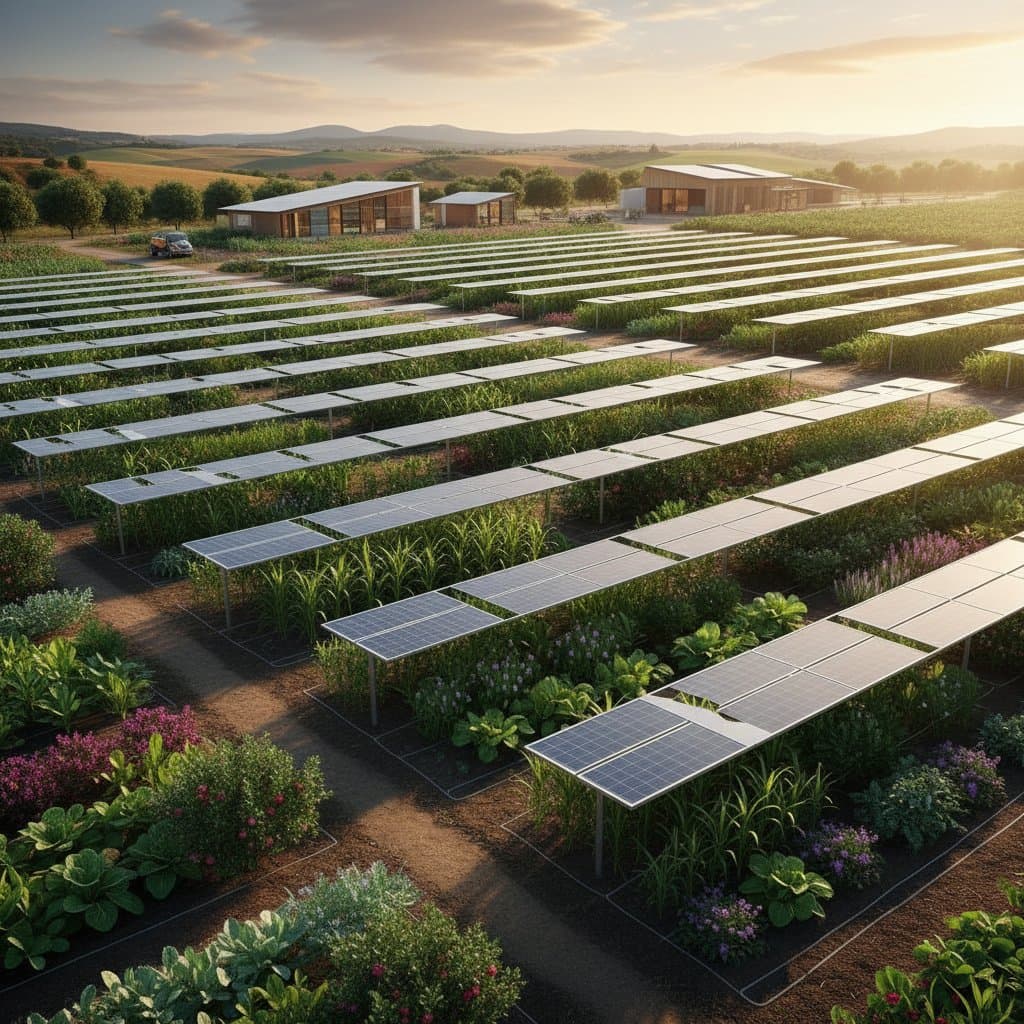
Integrating Solar Energy and Agriculture in Modern Farms
Solar farms play a crucial role in national clean energy initiatives. Communities increasingly seek ways to harmonize renewable energy development with food production and land conservation. Agrivoltaics addresses this challenge by combining solar power generation with active farming on the same plot, yielding both electricity and crops. Farmers, utility developers, and policymakers recognize this method as a viable solution for sustainable land management.
This guide details the mechanics of dual-use solar systems, applicable safety and installation standards, and options for homeowners or small-scale landowners to participate securely. It covers essential electrical and structural specifications that ensure efficiency and adherence to building codes.
Establishing Safety and Electrical Protocols
Agrivoltaic projects start with comprehensive electrical design and safety protocols. Integrating farm activities with powered infrastructure necessitates clear separation of electrical circuits and robust physical barriers.
Key hazards to address:
- Direct contact with live wires or charged enclosures.
- Ground faults exacerbated by moist soil conditions.
- Wire damage caused by livestock or machinery.
- Arcing from insecure connections.
A certified electrician handles all aspects of wiring, conduit installation, and grounding. Individuals without specialized training avoid splicing, repositioning, or examining solar wiring. Prior to accessing any enclosed electrical zone, personnel employ a non-contact voltage tester to verify that no metallic surfaces carry current.
Outdoor electrical components require certifications for wet or damp environments. Authorities mandate burial of conduits at specified depths, confirmed through local inspections. Grounding conductors remain uninterrupted and shielded against corrosion throughout their length.
Navigating Regulations and Building Codes
Agrivoltaic installations comply with electrical codes identical to those for conventional solar arrays. The National Electrical Code stipulates accurate labeling, accessible disconnect switches, and overcurrent safeguards. Local zoning and building offices impose restrictions on panel heights and land coverage percentages. Agricultural exemptions might apply, though requirements differ by location.
Landowners submit detailed site plans for approval prior to construction. Inspectors evaluate grounding integrity, bonding effectiveness, and system accessibility. Compliance with soil preservation and environmental guidelines receives additional scrutiny.
Grid-connected systems involve interconnection contracts and net metering arrangements. Licensed professionals execute the final grid connection.
Engineering the Fusion of Farming and Solar Infrastructure
Successful integration demands precise engineering that accommodates both mechanical and biological elements. Electrical layouts consider fluctuations in soil humidity, airborne dust, and accumulating organic matter. Agricultural practices adapt to modified light patterns beneath panels.
Optimizing Soil and Water Delivery
Solar panels alter the shaded microclimate below. Farmers adjust crop spacing or irrigation schedules accordingly. Drip irrigation proves effective, as it targets root zones without exposing electrical parts to moisture. Install irrigation tubing at minimum twelve-inch distances from underground conduits or grounding rods to prevent inadvertent disruptions.
Selecting Appropriate Crops
Crops tolerant of partial shade, including lettuce, spinach, and various herbs, thrive in agrivoltaic settings. Root vegetables or high-stature grains benefit from increased panel separation. Local agricultural extension services provide tailored recommendations based on regional climate and soil profiles.
Incorporating Livestock
Certain operations utilize panel underspace for rotational grazing. Sheep serve as an ideal choice due to their size compatibility with panel heights and their role in managing undergrowth. Isolate electric fencing from the solar grounding network to eliminate risk of current interference. Electricians confirm electrical isolation using continuity testing prior to introducing animals.
Conducting Maintenance and Identifying Issues
Regular inspections sustain agrivoltaic system performance. Accumulated dust, debris, and plant growth can impair efficiency.
Essential maintenance procedures:
- Gently clean panels using soft-bristled brushes or low-pressure water streams.
- Examine conduit seals for signs of deterioration.
- Survey wiring for indications of animal or mechanical harm.
- Ensure grounding connections stay secure.
- Review inverter logs for anomalous patterns.
Indicators of electrical faults:
- Error codes displayed on the inverter interface.
- Frequent activation of circuit breakers.
- Thermal imaging reveals overheated areas.
- Discrepancies in voltage readings between panel frames and earth ground.
Upon detecting issues, operators activate the primary disconnect to isolate the system and summon a licensed electrician. Personnel refrain from accessing junction boxes or inverter interiors without authorization.
Implementation Guide for Homeowners and Small-Scale Operators
Large agrivoltaic ventures demand multidisciplinary teams, yet modest installations succeed through meticulous preparation.
Preliminary actions:
- Consult the local building authority regarding zoning permissions and necessary permits.
- Engage a certified electrician for every electrical task.
- Select equipment certified for outdoor, farm-adjacent use.
- Designate unobstructed pathways for emergency access.
Ongoing management:
- Document inverter outputs and maintenance timelines systematically.
- Prune surrounding foliage to minimize panel shading.
- Regularly assess fences and enclosures for livestock containment.
- Arrange yearly evaluations by qualified professionals.
Post-installation modifications to wiring or panel arrangements require professional oversight and approval.
Advancing Sustainable Dual-Use Systems
Agrivoltaics advances renewable energy by preserving agricultural land while generating power. This approach fosters collaboration among electricians, agronomists, and engineers.
To proceed effectively:
- Initiate a feasibility assessment encompassing agricultural yields and electrical outputs.
- Collaborate with regional extension services for crop optimization advice.
- Select solar installers experienced in farm-integrated projects.
- Analyze operational data to fine-tune planting cycles and upkeep routines.
Adherence to codes and strategic planning enable landowners to achieve reliable energy production alongside enduring crop yields. Agrivoltaics illustrates the compatibility of sound electrical practices and innovative farming techniques.