
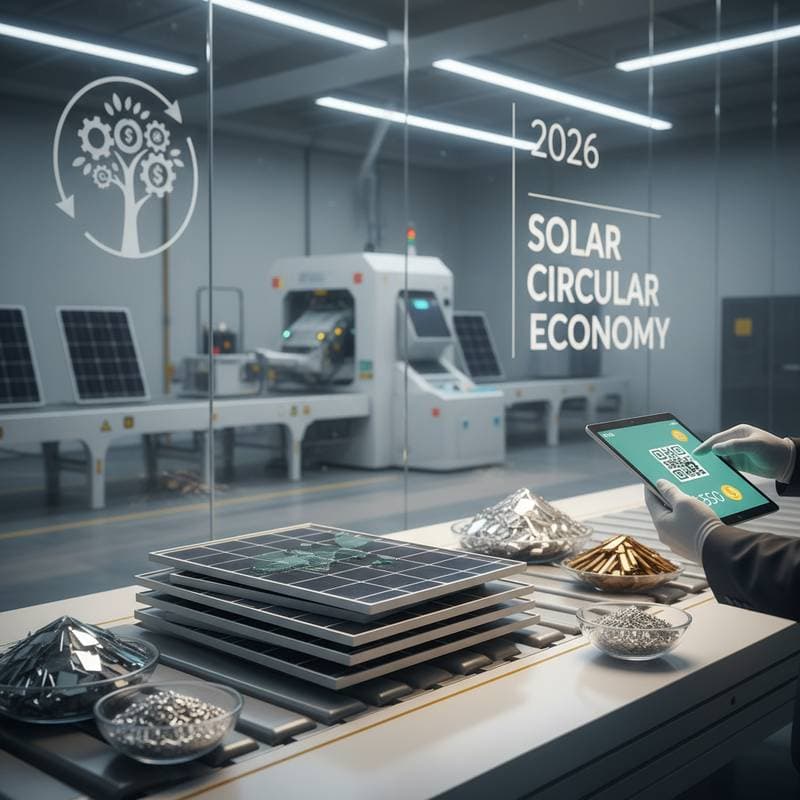
Introduction to 2026 Solar Recycling Incentives
Navigating solar energy developments often presents challenges, particularly with evolving regulations and support mechanisms. Homeowners frequently question the fate of panels upon reaching the end of their service life and anticipate potential expenses tied to replacement. The forthcoming solar recycling regulations deliver a structured, beneficial resolution. These guidelines establish protocols for ethical panel disposal while providing monetary rewards for reclaiming materials previously discarded.
This evolution signifies a pivotal advancement in solar energy practices. It integrates renewable power generation with efficient resource recovery. Panels no longer destined for landfills transform into recoverable resources, including glass, aluminum, and various metals suitable for reintegration into manufacturing processes or new solar installations.
The Importance of Solar Panel Recycling
Solar panels incorporate essential components like silicon, copper, and silver. Upon conclusion of operational lifespan, approximately 80 to 90 percent of these elements prove recoverable. However, expenses associated with collection, transportation, and processing deter widespread participation, leading some panels to enter conventional waste disposal channels.
The 2026 regulations address this issue through direct financial reimbursements for panels processed via certified channels. Funding derives from extended producer responsibility initiatives and authenticated recycling certifications. Individuals submitting panels to designated centers qualify for payments or offsets applicable to future installations.
Such measures yield dual benefits for the environment and economy. Recycling one panel diverts approximately 60 pounds from landfills and preserves reusable metals. Furthermore, it diminishes reliance on newly extracted resources, thereby curtailing emissions linked to extraction and production activities.
The Solar Recycling Process Step by Step
Homeowners or professional installers initiate the procedure by decommissioning panels that operate at less than 80 percent of initial capacity. Rather than disposal, these units proceed to vetted collection sites.
Facility personnel disassemble frames, electrical boxes, and glass surfaces. Specialized thermal or mechanical techniques liberate metals from silicon wafers. Materials undergo categorization based on composition and quality. Glass fragments convert into fresh panels through crushing and reforming. Aluminum structures melt for recasting. Silver and copper yield to chemical dissolution or electrolytic separation.
All procedures adhere to rigorous environmental protocols to eliminate risks of contaminant release or airborne particles. Accredited processors document recovery efficiencies and secure waste management practices. Compensation follows, calculated according to panel mass and intrinsic material worth.
Calculating Potential Rewards and Benefits
A standard residential solar panel registers around 40 pounds in weight. This breaks down to roughly 75 percent glass, 10 percent aluminum, with remaining portions comprising polymers, silicon, and traces of silver and copper. A conventional 7-kilowatt array includes approximately 20 panels, totaling near 800 pounds of recoverable content.
Should recyclers compensate at 15 cents per pound for eligible submissions, owners might secure about 120 dollars for an entire setup. Certain regions intend supplementary premiums for utilization of licensed venues, potentially elevating returns to 200 dollars.
Manufacturers engaging in take-back schemes often extend trade-in allowances toward advanced, more performant models. Consequently, recycling facilitates partial funding for system enhancements.
Financial Considerations and Return on Investment
Concerns arise regarding whether recycling expenses exceed reimbursements. In reality, aggregated cash returns, incentive credits, and waived disposal charges typically result in positive outcomes.
Consider a scenario where extraction and delivery incur 150 dollars, offset by 200 dollars in recycling proceeds. The net position improves by 50 dollars. Pairing this with a replacement system generating annual electricity savings of 1,200 dollars sustains robust investment recovery, while reclaimed elements replenish supply networks.
These programs further alleviate municipal disposal surcharges, which span 50 to 100 dollars per ton. Cumulative effects bolster long-term viability within the solar sector.
Broader Environmental and Economic Effects
Implementing these incentives reshapes inventory strategies among installers and vendors. It promotes panel enrollment via unique identifiers denoting age and makeup. Enhanced traceability aids recyclers in scaling operations and upholding regulatory adherence.
Recycling fosters employment in recovery operations and supply chain logistics. Emerging centers demand skilled workers, including separation specialists, oversight personnel, and technical experts focused on eco-friendly extraction. The national economy gains as domestic production incorporates these resources, reducing import dependencies.
Locally, this framework complements Philadelphia's objectives for minimizing waste and expanding clean energy access. It safeguards landfills from heavy metals and bolsters the area's sustainable development. Program participants actively enhance air quality, curb refuse accumulation, and fortify communal resilience.
Steps to Prepare for Recycling
Individuals may commence readiness by examining warranty documentation and retaining setup documentation. Panels often carry guarantees spanning 25 years, though efficacy may wane sooner amid shading or elevated heat exposure. Awareness of deployment timelines and output metrics informs optimal replacement timing.
Upon readiness, engage the initial provider or a sanctioned recycler for collection arrangements. Verify program enrollment for monetary awards and clarify reimbursement terms upfront. For upgrades, solicit estimates encompassing decommissioning and incentive applications.
Performance monitoring tools prove invaluable. Systems equipped with production trackers reveal daily yields. Substantial deviations from projections signal opportunities for evaluation, repair, or full substitution.
Strategies to Maximize Panel Longevity
Routine maintenance prolongs system durability and postpones recycling requirements. Clean surfaces using gentle water and neutral detergent quarterly to clear accumulations of dirt or organic matter. Prune adjacent foliage to avert shadows and litter interference.
Inspect fixtures for rust or instability annually. Engage qualified professionals to measure electrical performance. Minor defects, such as fractures or dislodged fittings, frequently permit targeted fixes, preserving overall productivity.
Ultimately, end-of-life recycling perpetuates the panels' utility. Reintroducing components into fabrication circuits completes the renewable energy continuum, yielding enduring advantages.
Frequently Asked Questions
What criteria determine eligibility for panel recycling?
Panels exhibiting reduced efficiency, physical impairment, or warranty expiration qualify for processing at authorized sites.
What financial returns might homeowners anticipate from recycling?
Reimbursements fluctuate with commodity prices and initiative allocations. Expectations range from 100 to 200 dollars for standard home systems.
Is personal panel removal required?
No. Licensed professionals manage safe extraction and delivery to processing locations.
Are thin-film panels recyclable under these rules?
Yes, although they necessitate distinct handling. Verify recycler capabilities, as some prioritize crystalline silicon variants prior to arrangements.