
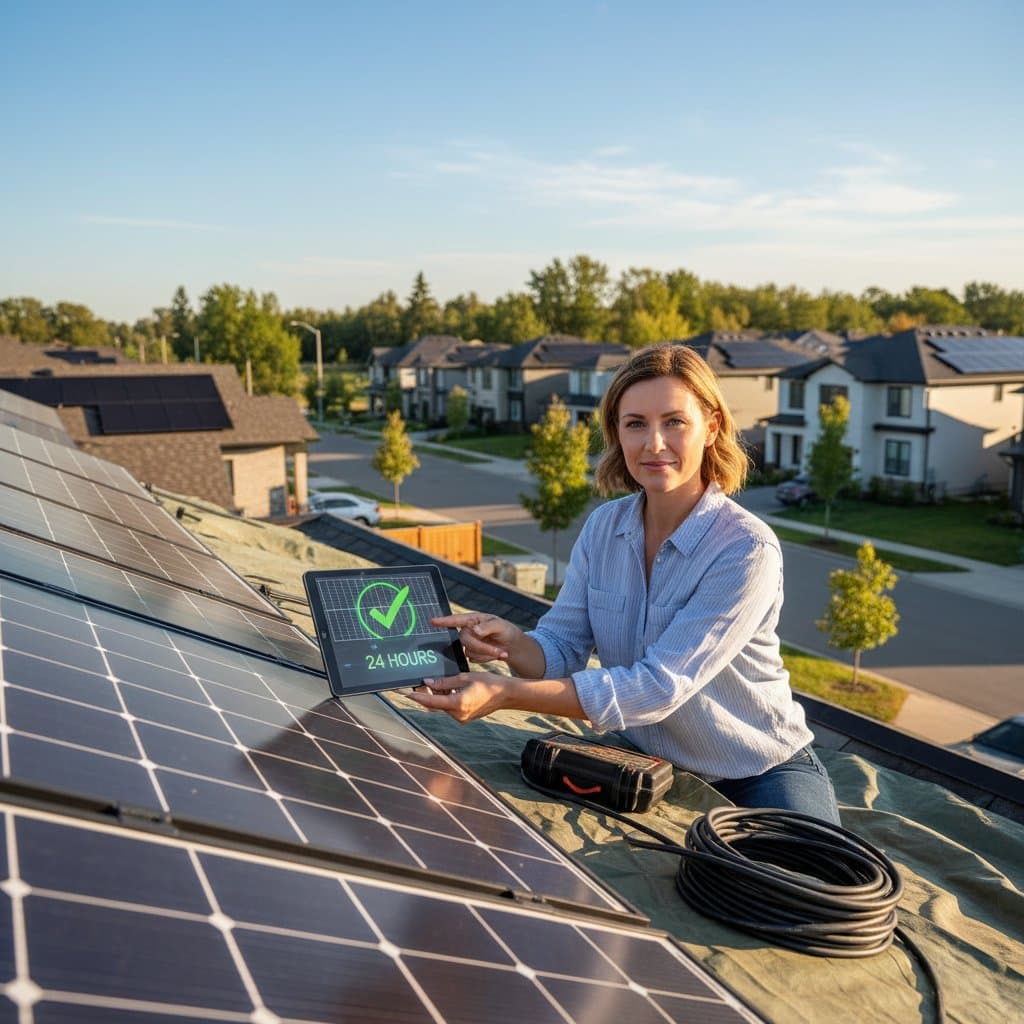
New Rules Slash DIY Solar Permit Wait Times
Homeowners who choose to install solar panels themselves often encounter significant obstacles. Prolonged permit waits, intricate paperwork, and varying local regulations create barriers that extend timelines by weeks. These delays prevent panels from generating electricity sooner. Recent policy updates address these issues directly, with initial outcomes demonstrating substantial progress.
Reasons for Historical Permitting Delays
Permitting processes vary across jurisdictions, leading to inconsistencies. Some areas depend on paper-based applications and manual evaluations, which require multiple revision cycles for even basic rooftop installations. In numerous urban settings, do-it-yourself installers face waits exceeding one month. During this period, equipment remains idle, and access to financial incentives stays deferred.
The updated policies focus on eliminating these inefficiencies. They consolidate review procedures and establish uniform inspection criteria. The primary aim involves accelerating approvals for compact, standards-compliant systems that adhere to established safety protocols.
Key Changes Introduced by the New Rules
The revised system introduces a digital permitting platform that performs automated compliance assessments. Homeowners submit system blueprints, electrical schematics, and component details via an online interface, eliminating the need for physical submissions or alignment with business hours. The platform evaluates elements such as structural capacity, wiring configurations, and certification validity against local codes. Compliant submissions receive permits nearly immediately.
Jurisdictions implementing this approach report average processing times reduced from weeks to under two days. In select areas, approvals for conventional solar arrays below ten kilowatts occur on the same day.
Practical Application of the Process
Consider a homeowner equipping a south-facing roof with a 6-kilowatt system. The individual inputs details on panel arrangement, mounting hardware, and inverter specifications into the portal. The software cross-references these against requirements for wind resistance, conductor dimensions, and circuit protection. Upon validation, a digital permit generates promptly. This enables scheduling an inspection immediately following installation completion. What previously spanned a month now concludes within one week.
This efficiency extends to utility interconnections. Standardized data submission facilitates quicker reviews by engineers, minimizing holdups from incomplete or erroneous information.
Financial and Operational Benefits of Accelerated Approvals
Reduced timelines translate to tangible economic advantages. Each delayed week incurs additional utility expenses prior to solar generation. A 6-kilowatt setup typically yields 7,800 kilowatt-hours annually. With an average rate of 18 cents per kilowatt-hour, this equates to approximately 1,400 dollars in yearly value. Shortening the permit phase from four weeks to one unlocks three weeks of production, delivering around 80 dollars in prompt savings. It also lowers ancillary expenses related to oversight and funding.
For self-installers, these gains persist long-term. Quicker approvals foster assurance in planning, promote meticulous execution, and enable timely utilization of rebates and tax credits.
Preparation and Expectations for Homeowners
The streamlined system demands precise submissions to function effectively. Automated reviews succeed only when components align with verified specifications. Accurate roof assessments, connection layouts, and grounding configurations prove essential. Expedited permits complement, rather than supplant, thorough on-site safety checks.
Homeowners benefit from assembling the following prior to application:
- Panel configuration including roof measurements and orientation angles
- Mounting structure specifications for load-bearing support
- Wiring schematic detailing conductor gauges and protective devices
- Manufacturer documentation for panels, inverters, and frames
- Evidence of adherence to fire safety separation standards
Post-submission, the platform analyzes documents and either approves or identifies targeted adjustments.
Guidance for Do-It-Yourself Installers
To leverage these updates, verify local adoption of the digital system. Certain areas retain conventional methods, although transitions to electronic formats accelerate. Prior to procurement, ensure designs conform to prescribed formats to avert subsequent interruptions.
Following setup, utilize monitoring applications or inverter interfaces to track performance. Retain electronic records of permits and inspections for support claims. Perform biannual panel cleaning, assess shading from vegetation, and compare utility statements against projected outputs.
Benefits Realized Through Streamlined Solar Adoption
These enhancements grant homeowners greater autonomy in their energy projects. Diminished delays accelerate financial returns, ease regulatory navigation, and enhance collaboration with authorities. Ultimately, more individuals access sustainable power generation with reduced complexity and heightened reliability.
Frequently Asked Questions
What qualifies as a standard solar system under these rules?
Systems up to ten kilowatts that use certified components and follow code-compliant designs typically receive expedited review.
Do all municipalities use the digital platform?
Adoption varies; larger cities lead the shift, but smaller jurisdictions may still process manually. Contact your local building department to confirm.
What if my submission requires corrections?
The platform highlights specific issues, allowing resubmission without restarting the process, often resolving within hours.
How do faster permits affect incentives?
Quicker approvals enable earlier claims on rebates, potentially increasing overall project value by aligning with program deadlines.