
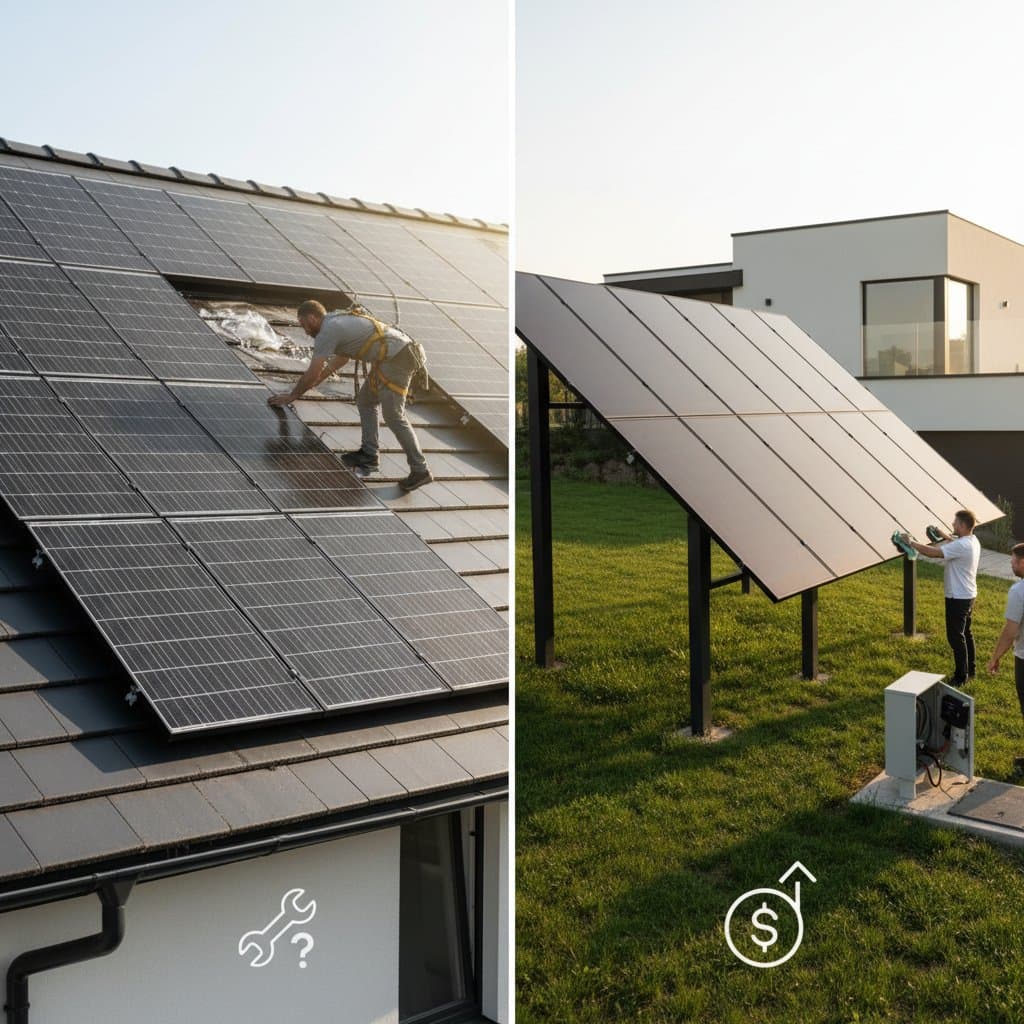
Ground-Mounted Solar Outperforms Roof Systems on Lifetime Costs in 2025
Homeowners in Pennsylvania face a key decision when adopting solar energy: whether to install panels on the roof or on the ground. Both options generate clean power, yet they differ significantly in financial implications that extend well beyond the initial purchase. This analysis examines installation expenses, ongoing maintenance, performance factors, and long-term value to determine the more economical choice for residential solar setups.
Understanding these distinctions helps Pennsylvania residents maximize returns on their solar investments while minimizing unexpected expenses. Factors such as local climate, roof condition, and property layout play crucial roles in the decision. By evaluating total ownership costs, individuals can select a system that aligns with their budget and energy goals.
Roof-Mounted Solar: Initial Savings with Emerging Challenges
Roof-mounted solar panels represent the traditional approach for many households, leveraging available rooftop space without requiring additional land. This method typically involves securing panels directly to the existing roof framework, which streamlines the setup process and reduces material needs. As a result, the upfront investment often appears more affordable compared to alternative configurations.
Key Advantages
- Eliminates the need for site preparation, such as land clearing or soil grading.
- Shortens electrical wiring distances to the home's service panel, lowering conduit and cabling expenses.
- Accelerates permitting processes in most Pennsylvania municipalities, where roof installations qualify as standard residential projects.
- Qualifies for common incentives, including federal tax credits and state rebates that apply to rooftop arrays.
These benefits make roof systems appealing for properties with suitable south-facing roofs and limited yard space. However, the simplicity of installation masks potential drawbacks that influence overall affordability.
Concealed Expenses
Roof installations introduce several deferred costs that homeowners may overlook during planning. For instance, the condition of the underlying roof structure demands careful assessment. If shingles or roofing membranes approach the end of their 20- to 30-year lifespan, installers recommend delaying solar work until after replacement. Otherwise, panels must later be dismantled for re-roofing, with reinstallation labor potentially doubling the original setup fee, which can reach $5,000 or more for a typical 10-kilowatt system.
Access for routine inspections or cleaning poses another challenge. Panels on sloped roofs necessitate specialized equipment, such as harnesses and scaffolding, increasing the cost of professional services to $200 to $500 per visit. Homeowners attempting DIY maintenance risk falls or voiding warranties, further elevating expenses.
Elevated operating temperatures also affect performance. Roof panels absorb heat from the structure below, operating 10 to 20 degrees Fahrenheit warmer than ground alternatives. This thermal stress diminishes efficiency by 0.5% per degree above 77°F, translating to 5% to 10% less annual energy output over time. In Pennsylvania's variable climate, with hot summers and cold winters, these losses compound, extending the payback period by years.
Moreover, mounting hardware creates roof penetrations that require meticulous sealing with flashing and caulk. Over decades, sealants degrade under UV exposure and freeze-thaw cycles, leading to leaks that damage the roof deck or interior spaces. Repairing such issues often involves partial panel removal, adding $1,000 to $3,000 in unforeseen costs, as documented in industry audits of systems installed before 2020.
Field studies from solar maintenance firms indicate that 40% of roof-mounted arrays require significant interventions within 10 to 15 years, including roof repairs or efficiency upgrades. These expenses rarely factor into initial bids, surprising owners who anticipated seamless operation.
Ground-Mounted Solar: Elevated Initial Investment, Superior Longevity
Ground-mounted systems position panels on sturdy frames anchored to the earth, often in backyards or open areas away from the home. While this setup demands more upfront capital for foundations and elevated structures, it addresses many limitations of rooftop installations. Pennsylvania properties with ample land, particularly in suburban or rural areas, benefit from this flexible design.
Primary Advantages
- Simplifies ongoing maintenance through ground-level access, eliminating the need for ladders or safety gear.
- Enhances energy production with optimal tilt angles and orientations, adjustable to capture maximum sunlight year-round.
- Minimizes risks to the home structure, avoiding roof penetrations and weight loads that could compromise integrity.
- Supports scalability, allowing easy addition of panels as household energy needs grow or battery storage integrates.
Installation involves site-specific engineering, such as concrete footings or helical piles to withstand wind and soil shifts common in the region. Though labor-intensive, this durability ensures panels endure Pennsylvania's harsh weather, from heavy snowfalls to high winds, without frequent interventions.
Mitigated Long-Term Costs
The higher entry price, typically 20% to 30% above roof equivalents—or $20,000 to $40,000 for a standard array—offsets through reduced upkeep. Cleaning requires only a garden hose and soft brush, a task completable in under an hour without professional help. Annual maintenance budgets drop to $100 or less, compared to $500-plus for roofs.
Ground systems operate in cooler air, boosting efficiency by up to 15% in summer months. Shading from trees or buildings can be avoided by precise placement, further increasing output. Inverter and wiring inspections occur at waist height, enabling quick identification of issues like loose connections or dust buildup, preventing minor problems from escalating.
Structural risks remain low, as arrays stand independently from the home. No re-roofing disruptions occur, and expansion avoids costly roof modifications. Over 25 to 30 years, these factors yield 10% to 20% more lifetime energy, accelerating financial returns despite the initial outlay.
Lifetime Cost Breakdown
Assessing total ownership demands a comprehensive view of all phases, from setup to decommissioning. The table below summarizes key categories based on average Pennsylvania installations for a 10-kilowatt system.
| Category | Roof-Mounted | Ground-Mounted |
|---|---|---|
| Initial Installation | $25,000 - $35,000 | $30,000 - $45,000 |
| Annual Maintenance | $300 - $600 | $50 - $200 |
| Efficiency Over Life | 85% - 90% of rated output | 95% - 100% of rated output |
| Expansion Ease | Requires roof alterations | Simple frame extensions |
| Structural Risk | Roof damage or leaks likely | Negligible home impact |
| Inspection Safety | Professional services needed | DIY accessible |
Calculations incorporating 3% annual inflation and 5% energy cost escalation reveal ground systems recouping costs 2 to 5 years sooner. For homes with roofs over 15 years old, the gap widens, as re-roofing alone can add $10,000 to roof totals.
Optimizing Performance Through Maintenance
Environmental factors like pollen in spring, dust from summer droughts, and snow accumulation in winter impair panel output by up to 20% if unaddressed. For roof systems, safe cleaning demands certified technicians to navigate pitches and heights, scheduling visits every three to six months in high-debris areas.
Ground mounts permit straightforward routines: rinse panels monthly with lukewarm water to remove residues, using a non-abrasive brush for stubborn spots. Steer clear of high-pressure tools that might scratch anti-reflective coatings or crack glass. During inspections, examine frames for corrosion, especially in coastal Pennsylvania regions affected by salt air. Test electrical components for continuity, ensuring ground fault circuit interrupters function to prevent shocks.
Monitoring tools, such as app-connected inverters, track real-time production. Ground setups facilitate physical checks of these devices, allowing prompt fixes for underperformance. In one Pennsylvania case study, regular ground maintenance preserved 98% efficiency over a decade, versus 88% for comparable roof arrays.
Ground-Mounted Solar Emerges as the Cost-Effective Choice
When all elements align—installation, upkeep, efficiency, and durability—ground-mounted solar proves the superior investment for most Pennsylvania homeowners. The premium paid upfront translates to substantial savings over 25 years, often exceeding $15,000 in avoided repairs and enhanced production. This edge grows for properties with suboptimal roofs or expansive lots, where flexibility amplifies benefits.
Incentives like the federal Investment Tax Credit, covering 30% of costs, apply equally, but ground systems maximize rebate value through longer, trouble-free service. Pennsylvania's net metering policies further reward higher outputs, shortening payback to under eight years.
Steps to Implement and Sustain Your Solar System
Transitioning to solar requires deliberate planning to secure lasting value.
- Assess roof viability with a professional inspection to estimate remaining lifespan and compatibility.
- Obtain detailed proposals from certified installers, including 25-year cost forecasts for both options.
- Review local regulations through your township or county office, confirming zoning for ground arrays and inspection timelines.
- Develop a maintenance protocol, assigning responsibilities and budgeting for tools like extension poles or monitoring software.
- Arrange yearly professional reviews to verify system integrity, from panel alignment to electrical grounding.
By following these measures, Pennsylvania residents position their solar choice for optimal performance and financial gain, contributing to a sustainable energy future.