
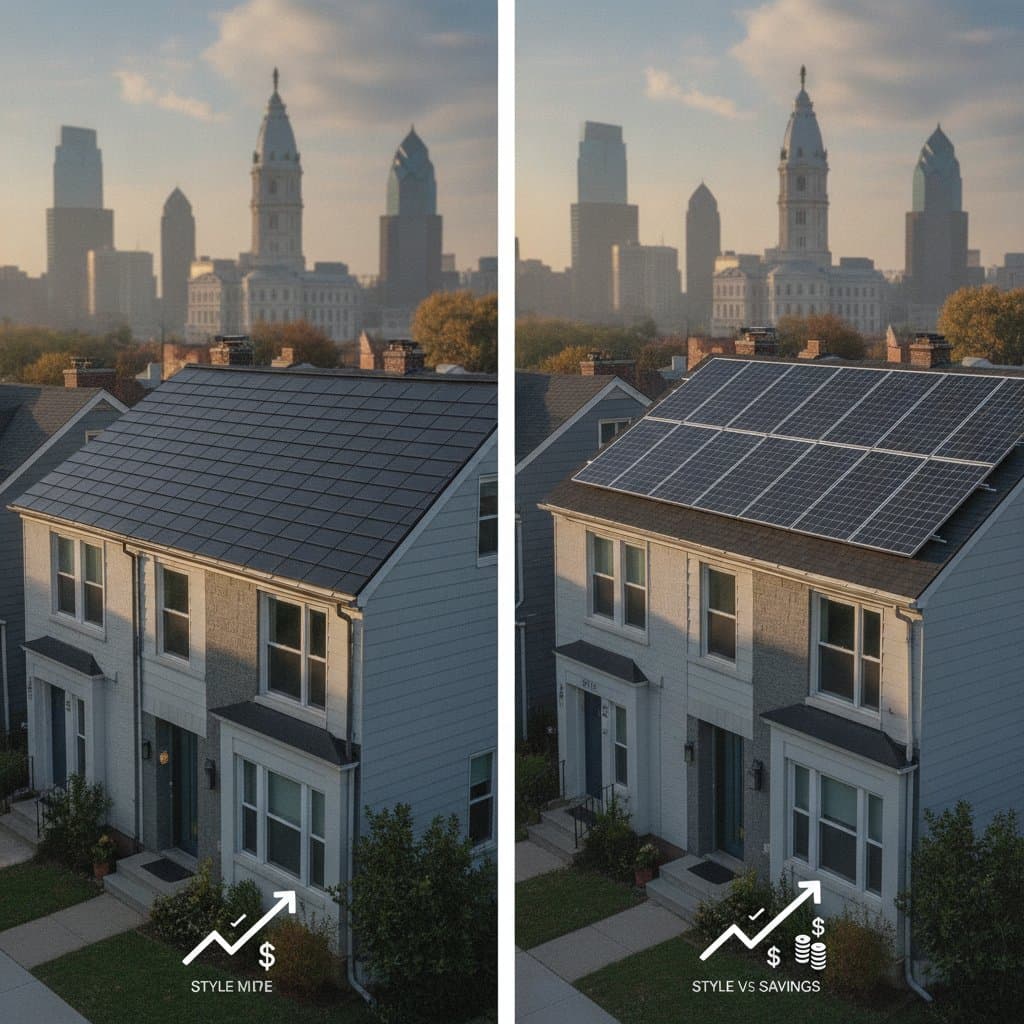
Real ROI for Solar Roof Tiles vs Traditional Panels
Homeowners in the Philadelphia region often compare solar roof tiles with traditional panels when evaluating energy upgrades. Each option converts sunlight into electricity and lowers grid dependence. Their designs, upfront costs, and service needs create different financial paths over time.
This guide outlines the key differences in performance, expenses, and returns under local conditions. It highlights when integrated tiles add value and when standard panels deliver quicker savings.
Energy Output Differences
Traditional panels convert more sunlight per square foot than most tile systems. High-efficiency models maintain strong production even on compact roofs. Tile arrays can lose output in shaded zones or on low-angle surfaces because of smaller cell areas.
Roof orientation and shading therefore influence long-term yield. Panels tend to outperform tiles when exposure is limited. Tiles still deliver reliable results on unobstructed slopes while maintaining a uniform appearance.
Cost Breakdown and Payback
Solar roof tiles require a full roof replacement in most cases, which raises initial expense. Traditional panels mount over an existing roof and avoid that added cost. When a new roof is already planned, tiles can reach closer cost parity with panels plus conventional shingles.
Payback periods shorten with higher local electricity rates and available incentives. Panels generally return investment faster because they add production without replacing sound materials. Tiles provide moderate energy savings alongside lasting visual benefits.
Property Value and Appearance
Integrated tiles create a single roof surface without visible racks. This unified look appeals to buyers who value architectural consistency. Studies indicate solar homes often sell faster, yet the price premium depends on neighborhood demand.
Historic districts in Philadelphia counties benefit from tiles that preserve original character. Panels suit owners who prioritize maximum output and shorter financial recovery.
Philadelphia Climate Factors
Local weather brings snow, rain, and temperature swings that affect both systems. Proper slope, drainage, and ventilation prevent moisture issues. Panels allow simpler snow clearing and routine checks. Tiles form a tighter seal but may require more time to clear after storms.
Secure mounting handles wind loads for either option. Regular inspections protect against leaks and maintain performance.
Financing and Incentive Choices
Homeowners can combine cash, loans, leases, or power purchase agreements. Tax credits and utility rebates reduce net cost for both technologies. Panel financing benefits from established lender networks. Tile projects may need specialists familiar with integrated products.
Review contract terms for warranty length, maintenance duties, and removal fees. Clear ownership of energy credits supports accurate ROI tracking.
Decision Framework
Roof condition, budget, and design priorities determine the stronger choice. Full roof replacement paired with a preference for seamless appearance favors tiles. Faster returns and simpler service point toward traditional panels.
Site assessments by licensed professionals confirm load capacity and electrical compatibility. Written estimates that list all permits and disposal fees support reliable calculations.
Ongoing Performance Tracking
Energy rates and equipment efficiency continue to evolve. Annual output reviews and timely maintenance protect returns for either system. Homeowners who match accurate assessments with quality installation achieve the most consistent results.