
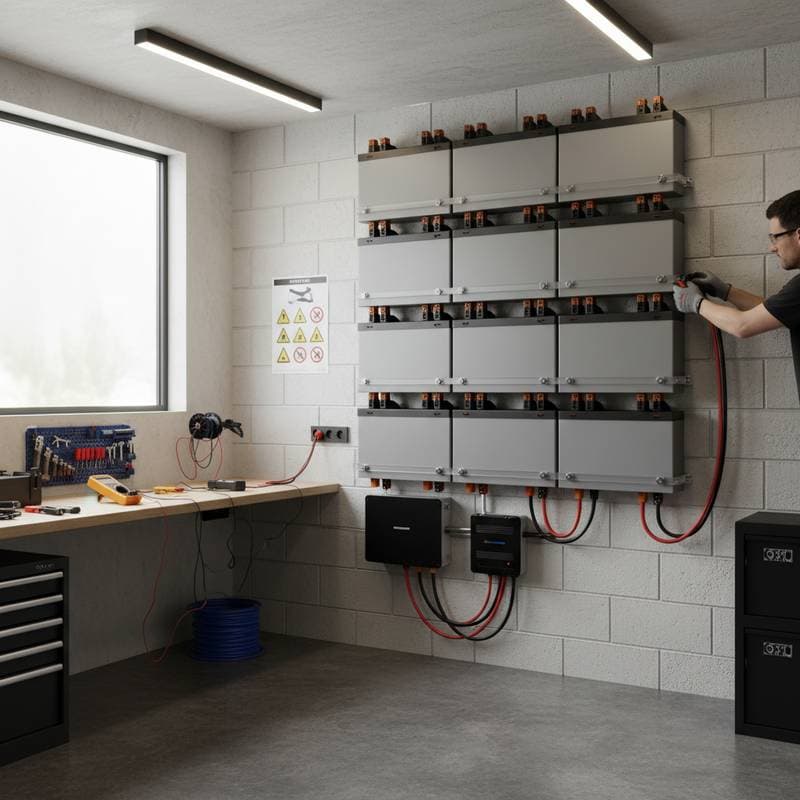
Introduction to DIY Battery Walls
Homeowners increasingly seek reliable backup power solutions amid rising energy costs and frequent outages. A DIY battery wall offers a practical alternative to costly commercial systems, providing scalable storage for solar setups. This guide outlines how to assemble a 10kWh LiFePO4 system for about $3,000, emphasizing safety and efficiency.
LiFePO4 batteries stand out for their longevity, safety, and performance in residential applications. With proper planning, individuals can achieve off-grid resilience without professional installation fees. The result empowers users to store excess solar energy and maintain essential functions during blackouts.
Benefits of a Home Battery Wall
Investing in a battery wall reduces reliance on the grid and lowers utility bills through time-of-use optimization. During peak demand, stored energy offsets expensive rates, yielding significant savings over time. Additionally, this setup enhances home value by demonstrating sustainable living commitments.
For solar users, integration maximizes renewable energy capture, minimizing waste from overproduction. The system's modularity allows expansion as needs evolve, ensuring long-term adaptability. Overall, it fosters greater control over energy consumption and environmental impact.
Key Components Required
Assembling a battery wall demands quality parts to ensure durability and performance. Start with LiFePO4 battery cells, which provide 10kWh capacity using eight 3.2V, 280Ah units connected in series and parallel configurations. These cells offer over 6,000 cycles and inherent thermal stability.
Battery Management System (BMS)
A robust BMS monitors voltage, temperature, and current for each cell, preventing overcharge or deep discharge. Select a 200A BMS compatible with 48V systems to handle inverter loads effectively. This component safeguards the pack and extends operational life.
Inverter and Charger
Pair the battery with a 3kW pure sine wave inverter for clean power output to household appliances. Include a 40A MPPT solar charge controller to optimize charging from panels. These elements convert and manage DC to AC power seamlessly.
Enclosure and Wiring
Use a ventilated metal enclosure to house the assembly, protecting against dust and impacts. Employ 4AWG copper cables with lugs for secure connections, and incorporate fuses or circuit breakers rated at 250A for overcurrent protection. Insulated tools and torque wrenches facilitate precise installation.
Step-by-Step Assembly Guide
Preparation involves gathering tools and verifying component compatibility. Work in a well-ventilated, dry space with adequate lighting. Label all parts to streamline the process.
-
Prepare the Battery Cells: Top balance the cells to equalize voltages using a dedicated charger. Aim for 3.65V per cell before assembly. This step ensures uniform performance and prevents imbalances.
-
Configure the Battery Pack: Connect four cells in series to form a 12.8V string, then parallel two strings for 25.6V and 560Ah capacity. Use bus bars for low-resistance joints, torquing to manufacturer specifications.
-
Install the BMS: Mount the BMS on the pack's negative terminal side. Wire sense leads to each cell's positive terminal sequentially. Connect the main positive and negative cables through the BMS for controlled flow.
-
Assemble the Enclosure: Secure the battery pack inside the enclosure with brackets. Add cooling fans if operating in warm environments. Route wires neatly with zip ties to avoid shorts.
-
Integrate Inverter and Charger: Mount the inverter nearby and connect its DC input to the battery output via a disconnect switch. Link the charge controller to solar inputs and battery terminals. Test connections with a multimeter for continuity.
-
Initial Testing and Commissioning: Power on the system without load to monitor BMS readings. Gradually apply a small load, such as LED lights, and verify stable output. Adjust settings via the inverter's interface for optimal efficiency.
Essential Safety Practices
Safety forms the foundation of any DIY electrical project. Wear insulated gloves and safety glasses throughout assembly to protect against sparks or shorts. Disconnect all power sources before handling connections.
Ground the enclosure to prevent electrical hazards, and install a smoke detector nearby due to lithium battery risks. Avoid mixing battery chemistries or using damaged cells, as they can lead to thermal runaway. Consult local codes for permitting requirements in your area.
Regular maintenance includes checking connections for corrosion and monitoring BMS alerts. Store spare fuses and have a fire extinguisher rated for electrical fires on hand. These measures minimize risks and ensure reliable operation.
Integrating with Solar Panels
To fully leverage the battery wall, connect it to existing or new solar arrays. A 2-3kW panel system charges the bank during daylight hours, achieving full capacity in 4-6 hours of sunlight. Use MC4 connectors for secure panel wiring to the charge controller.
Monitor energy flow with a shunt-based meter to track production and consumption patterns. This data informs adjustments, such as panel angling for maximum yield. Over time, the setup offsets initial costs through reduced grid dependence.
Long-Term Maintenance and Expansion
Annual inspections confirm cell health and tighten loose fittings. Clean dust from vents to maintain airflow, and recalibrate the BMS if discrepancies arise. LiFePO4 chemistry requires minimal upkeep, retaining 80% capacity after a decade.
Expansion options include adding parallel packs for increased storage. Ensure balanced charging across modules to avoid strain. This scalability supports growing households or additional appliances.
Secure Your Energy Future
Building a $3,000 battery wall transforms vulnerability into self-sufficiency, powering essentials like refrigerators and lights during outages. Homeowners gain peace of mind and financial benefits from this accessible project. Start planning today to harness solar potential fully.